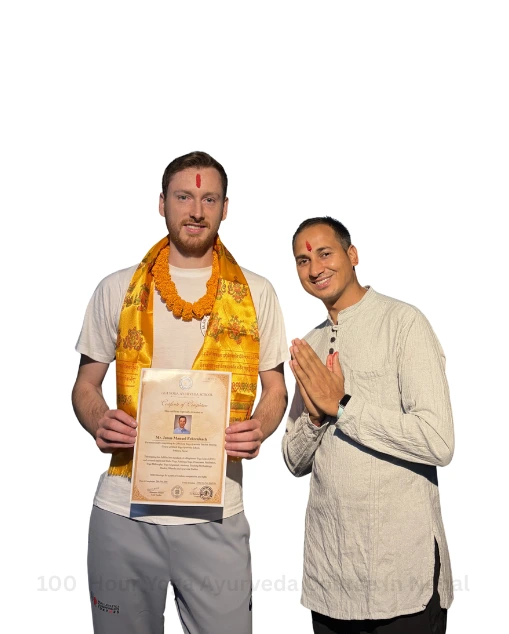
100 Hour Yoga Ayurveda Teacher Training course In nepal

🎉 Early Bird Discount

Book your seat 3 months in advance and receive a $50 USD discount on packages including Accommodation + Food.

100 Hour Yoga Teacher Training Nepal

100 Hour Traditional Yoga Ayurveda Teacher Training Course Syllabus

The 100 Hour Yoga Ayurveda Teacher Training Course in Nepal provides students with a strong foundation in traditional yogic knowledge. This program combines ancient yogic teachings with practical training including yoga philosophy, asana practice, pranayama, meditation, Ayurveda, and teaching methodology.

Yoga Philosophy

  • Introduction to Yoga
  • Types of Yoga
  • Patanjali Yoga Sutras Overview
  • Ashtanga Yoga – Eight Limbs of Yoga
  • Sanskrit Terminology in Yoga
  • Karma, Dharma & Reincarnation
  • Three Gunas – Sattva, Rajas, Tamas
  • Four Paths of Yoga – Karma, Bhakti, Jnana, Raja
  • Subtle Body – Nadis, Prana & Pancha Kosha

Yoga Asana Practice

  • Tadasana
  • Vajrasana
  • Trikonasana
  • Vrksasana
  • Utkatasana
  • Virabhadrasana I, II & III
  • Paschimottanasana
  • Garudasana
  • Halasana
  • Sarvangasana
  • Sirsasana
  • Shavasana

Pranayama & Breathing Techniques

  • Introduction to Pranayama
  • Natural Breathing
  • Abdominal Breathing
  • Thoracic Breathing
  • Nadi Shodhana
  • Kapalabhati
  • Bhastrika
  • Ujjayi Breath
  • Sheetali & Sheetkari

Meditation & Mindfulness

  • Introduction to Meditation
  • Mindfulness Meditation
  • Mantra Meditation
  • Loving Kindness Meditation
  • Chakra Meditation
  • Yoga Nidra

Ayurveda Basics

  • Introduction to Ayurveda
  • Definition of Health
  • Three Doshas – Vata, Pitta, Kapha
  • Prakriti Analysis
  • Ayurvedic Nutrition
  • Ayurvedic Cooking
  • Home Remedies
  • Detox & Fasting

Shatkarma (Yogic Cleansing)

  • Neti – Nasal Cleansing
  • Dhauti – Digestive Cleansing
  • Basti – Colon Cleansing
  • Trataka – Concentration Practice
  • Kapalabhati – Breath Cleansing
  • Nauli – Abdominal Cleansing

FAQs

Here are the most frequently asked questions

A 100-hour Yoga Ayurveda Teacher Training Course in Nepal is a short yet intensive program designed to deepen your understanding of yoga and Ayurveda. The course introduces students to asana practice, pranayama, meditation, yoga philosophy, anatomy, and Ayurvedic lifestyle principles, creating a holistic approach to health and well-being.
This course is suitable for beginners, yoga practitioners, wellness seekers, and aspiring yoga teachers who want to deepen their knowledge of yoga and Ayurveda. No prior teaching experience is required, and the training welcomes students from all backgrounds.
Students learn a variety of yogic practices and theoretical knowledge, including Hatha and Ashtanga yoga asanas Pranayama (breathing techniques) Meditation and mantra chanting Yoga philosophy and yogic lifestyle Basic anatomy and body alignment Ayurvedic diet and healing principles Teaching methodology and practice teaching These subjects help build a strong foundation in yoga and holistic health.
Most 100-hour yoga teacher training courses in Nepal run for 6 days. The training includes daily yoga practice, lectures, workshops, and self-study sessions.
Yes, the 100-hour program is perfect for beginners who want to explore traditional yoga and Ayurveda. It provides a strong foundation for personal practice and can also be the first step toward becoming a yoga teacher.
Nepal offers a peaceful Himalayan environment ideal for yoga and Ayurveda course practice. Students experience: Authentic yogic ayurvedic teachings Spiritual Himalayan atmosphere Healthy sattvic meals Deep meditation and self-reflection The natural surroundings help students focus on inner transformation and personal growth.
Yes, after successfully completing the course, students receive a 100-hour yoga teacher training certificate from the school. This training can later be combined with another 100 hours to complete a 200-hour yoga teacher training certification. 8. What is a typical daily schedule during the training? A typical day during the training may include: Morning meditation and pranayamaMantra Chanting Asana practice (Hatha or Ashtanga yoga) Yoga philosophy or Ayurveda lectures Anatomy and alignment workshops Teaching methodology practice Evening meditation or mantra chanting This structured routine helps students develop discipline and deepen their practice.
No prior experience is required. However, having basic familiarity with yoga can be helpful. The course is designed to guide students step-by-step in both practice and theory.
Yoga and Ayurveda are sister sciences that work together to create balance in body, mind, and spirit. Learning both systems helps students understand holistic healing, lifestyle management, and natural wellness practices, making the training more complete and transformational.